A structured design response to a complex healthcare SaaS scenario involving enterprise integrations, SMB growth, and regulatory compliance.
This model was developed as part of an executive-level strategy exercise. It reflects how I design delivery systems in complex, regulated environments.
TL;DR
Delivery predictability erodes when teams context-switch across competing priorities without a shared model for how work should flow.
This system sequences strategy before team design, embeds compliance directly into delivery flow, and introduces a lightweight six-stage lifecycle with explicit trade-offs. It restores predictability without sacrificing autonomy.
Guiding principles:
- Outcome over activity
- Autonomy with accountability
- Compliance embedded
- Early signal over certainty
Clear metrics and reporting rhythms create transparency without micromanagement, leading to stronger forecast confidence, earlier risk visibility, and greater trust across Product, Engineering, and Executive teams.
Core Model
Context
A regulated, multi-product healthcare SaaS platform operates across two distinct delivery horizons:
- Enterprise hospital integrations (long-cycle, high-complexity)
- SMB clinics (shorter-cycle, faster iteration)
At the same time, regulatory and clinical safety obligations require continuous attention.
Engineering teams context-switch across these competing priorities. Delivery dates slip. Forecast confidence erodes. Product, Engineering, and Executive stakeholders lack a shared model for how work should flow.
Predictability deteriorates, without any single failure point.
Core Problem
Delivery had evolved as a downstream execution function rather than a structural design decision.
Team structure, prioritisation, compliance, and reporting were layered incrementally over time. Under increasing complexity, this created:
- Conflicting delivery horizons
- Hidden trade-offs between enterprise, SMB, and compliance work
- Reduced visibility into risk
- Growing friction between functions
Predictability cannot be restored by tighter oversight. It must be designed into the system.
Strategic Sequencing
Delivery and team design are treated as downstream strategy decisions, not starting assumptions.
 In this B2B SaaS context, delivery follows a clear strategic sequence. Each layer informs the next, even as they continue to influence each other over time.
Shaping delivery and team strategy last prevents optimising mechanics in isolation, which can lock the organisation out of future opportunities. This approach ensures:
- Enterprise integration work does not stall SMB growth
- Regulatory and clinical safety requirements are treated as non-negotiable inputs
- Team structures support current priorities without constraining future product or platform evolution
Delivery Operating Model
A lightweight, outcome-aligned delivery system that improves predictability while preserving team autonomy and quality.
All initiatives follow a consistent six-stage lifecycle:

This structured rhythm reduces cognitive load across teams, provides predictable feedback loops, and surfaces risks and dependencies early, without creating unnecessary overhead.
Application
Team Structure & Rituals
Teams are organised around distinct delivery focus areas, with clear accountability and minimal role overhead.
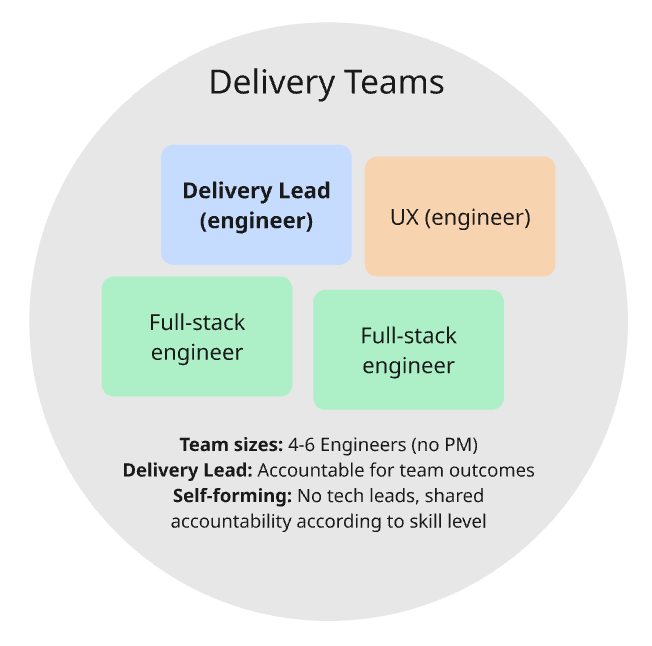
Small, stable delivery teams Teams are intentionally kept small (4-6 cross-functional engineers) to reduce coordination overhead and preserve flow. Stability over time supports shared context, faster decision-making, and stronger ownership, particularly across complex and regulated work.
Teams aligned by focus area
Teams align to clear delivery focus areas rather than technical layers. This reduces context switching, makes trade-offs explicit, and allows enterprise, SMB, and regulatory work to progress in parallel without competing for attention.

Lightweight, repeatable coordination
Team coordination relies on a consistent weekly cadence to maintain alignment without introducing heavy process. Regular touchpoints create shared visibility on progress, risks, and dependencies while preserving autonomy in day-to-day execution.
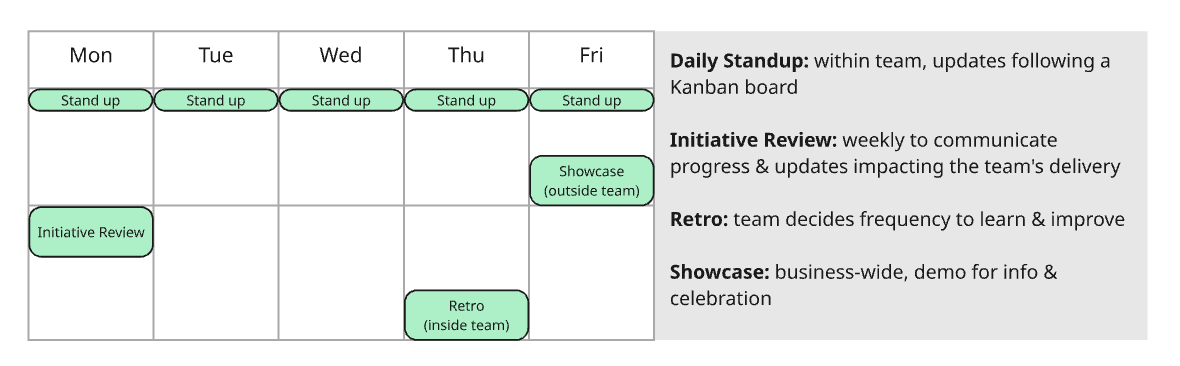
End-to-end ownership with embedded compliance Clear ownership and embedded compliance reduce handoffs, accelerate delivery, and ensure regulatory and clinical safety are considered continuously rather than as an afterthought.
- Engineers pair per problem and own delivery end-to-end
- Project kick-offs with clear problem framing, architectural intent, and Definition of Done
- Regulatory compliance and clinical safety treated as ongoing investments, not a separate stream
Prioritisation Framework
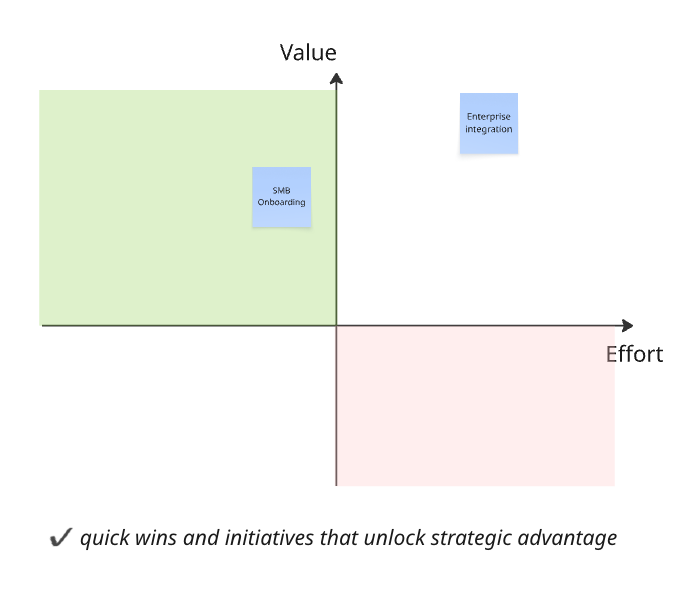
Balancing enterprise, SMB, and regulatory priorities requires explicit trade-offs. Initiatives are prioritised using an effort-value approach, ensuring high-impact work progresses first while technical health and compliance obligations are maintained.
 Engineering capacity is deliberately allocated to reflect organisational priorities: roughly 60% to business-driven OKRs, 20% to regulatory and clinical safety, and 20% to technical enablement and BAU work. Large initiatives are broken into smaller, releasable increments to maintain flow and reduce risk.
Making trade-offs explicit ensures compliance, quality, and technical health remain visible, preventing them from becoming hidden debt.
Reporting & Communication
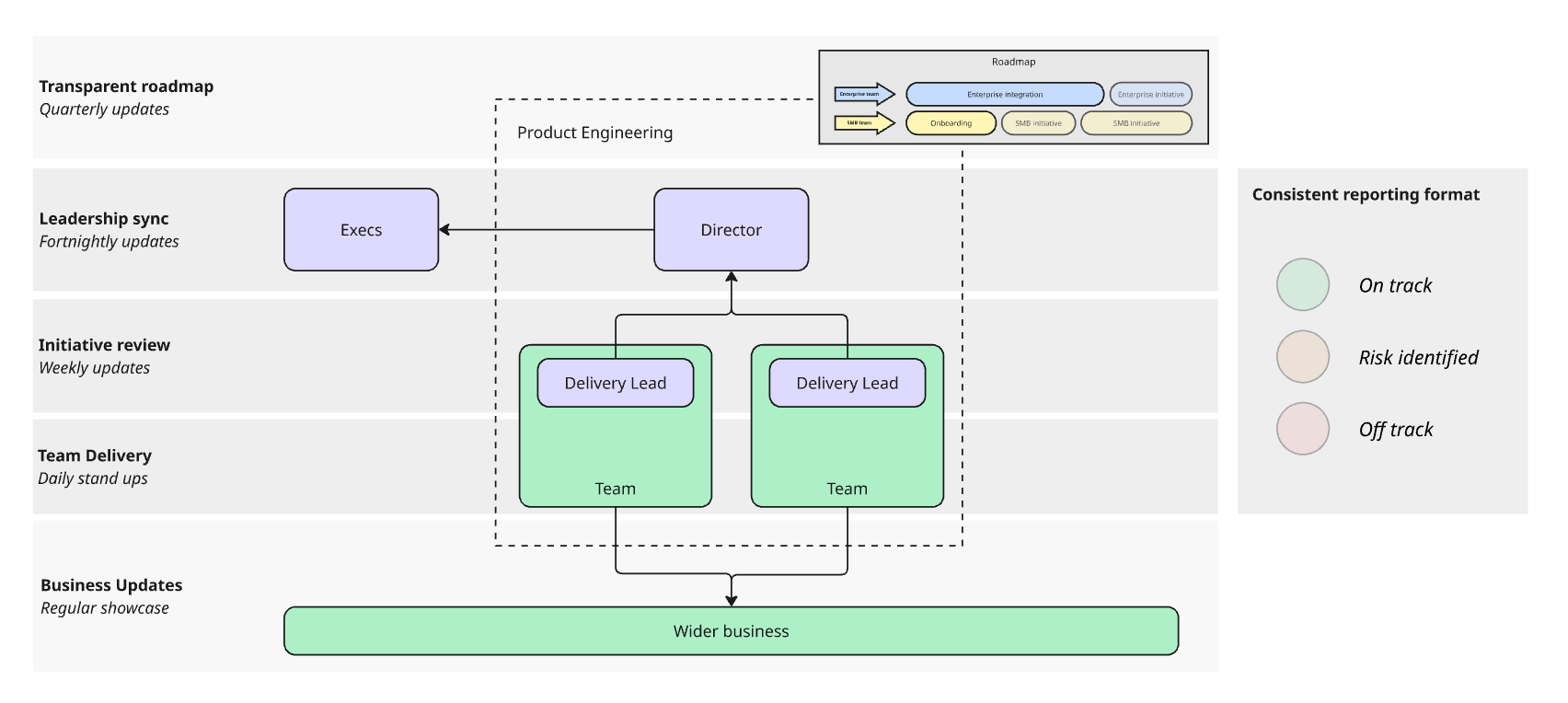
The goal is to keep executives, PMs, and engineers aligned without micromanagement. Transparency and structured communication ensure decisions are informed, risks are visible early, and teams maintain autonomy.
Key elements include:
Transparent roadmap Initiative progress is visible across evolving system architecture, giving stakeholders context without creating bottlenecks.
Delivery Lead accountability Each team has a Delivery Lead who guides planning, ensures commitments are met, and is accountable for outcomes, not a gatekeeper.
Regular, lightweight syncs
- Weekly Initiative Reviews with Delivery Lead, PM, and Director surface progress, blockers, and risks
- Fortnightly leadership syncs align Engineering, Product, Compliance, and Executive stakeholders with RAG-style reporting for clarity
Async-first communication Written updates and structured discussions replace unnecessary status meetings, keeping stakeholders informed while maximising team focus
Risk Management
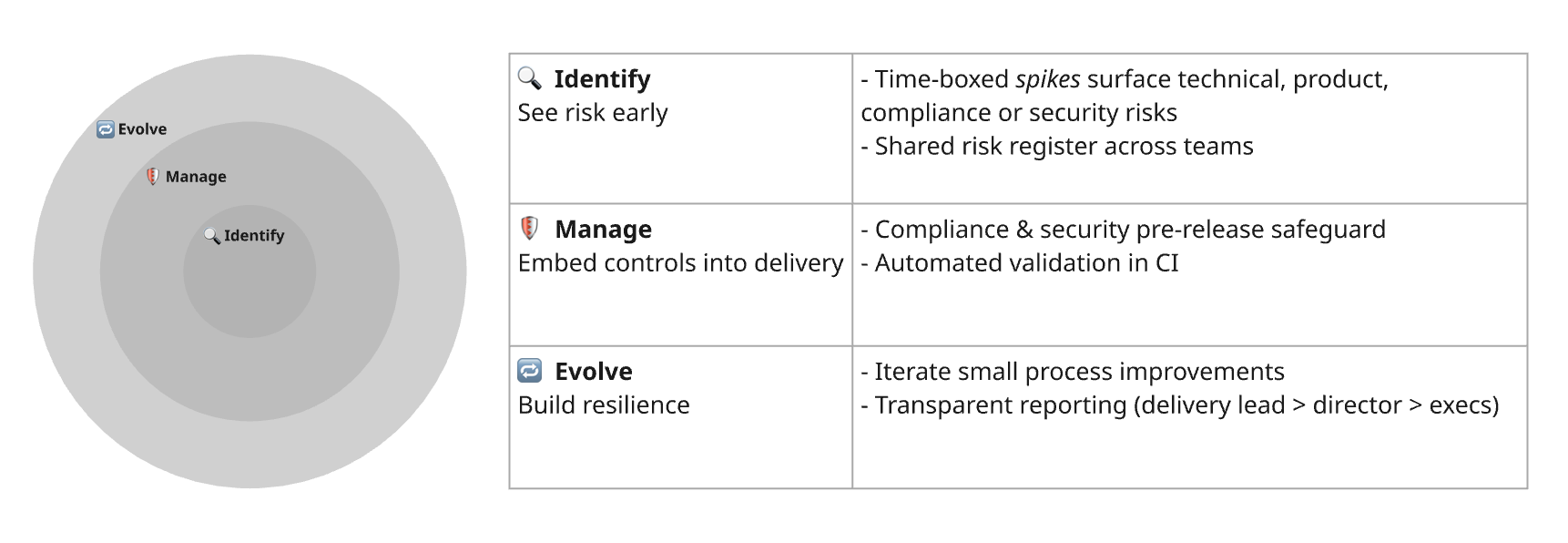
Delivery risk is managed proactively through embedded practices that make problems visible early and keep mitigation continuous. The model ensures teams and leaders can respond before issues escalate, preserving predictability and compliance.
Key approaches include:
Early risk visibility Weekly Initiative Reviews surface blockers, dependencies, and risks, and Delivery Leads flag potential issues (“yellow”) as soon as they arise.
Time-boxed exploration Spikes clarify technical or compliance unknowns before commitment, reducing downstream surprises.
Embedded compliance and security Regulatory and security requirements are integrated into delivery, supported by automated validation, iterative process reviews, and transparent escalation from Delivery Lead to Director to Executives.
Metrics
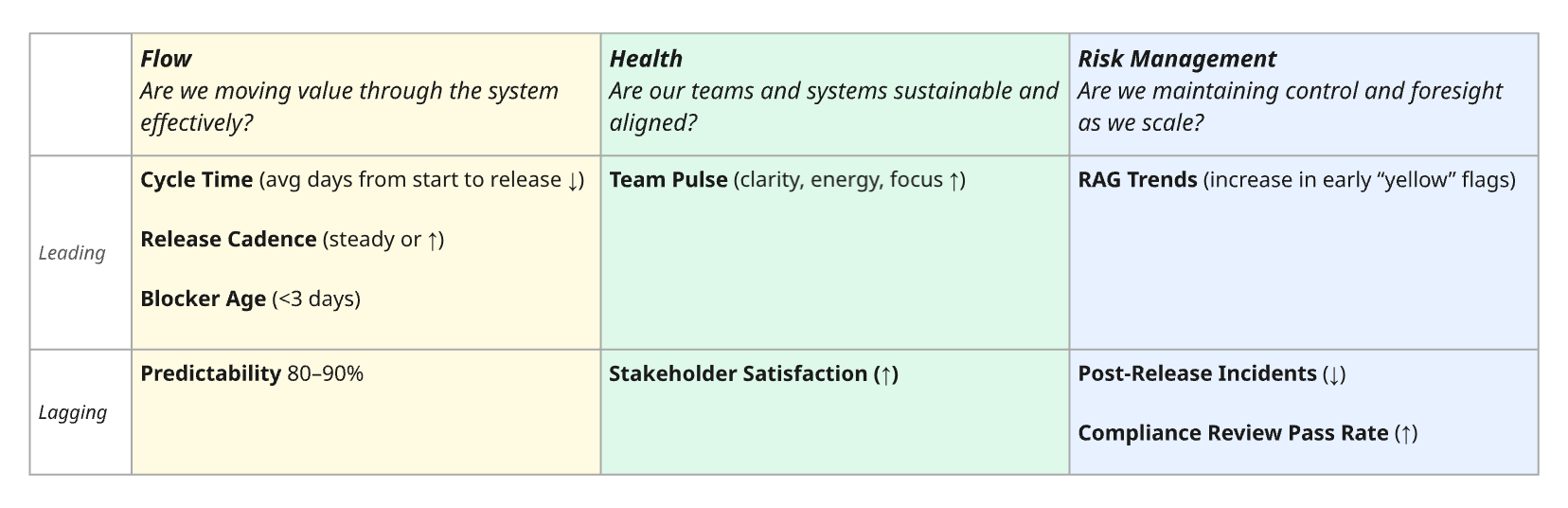
Metrics provide a balanced view of flow, team health, and risk, helping leaders and teams make informed decisions without micromanaging.
- Leading indicators track the delivery process in real time, surfacing bottlenecks, blocked work, or early warning signals so that issues can be addressed before they impact outcomes.
- Lagging indicators measure the impact of delivery on predictability, quality, compliance, and stakeholder satisfaction, showing whether the organisation is achieving its intended outcomes.
Together, these metrics make delivery transparent, measurable, and continuously improvable, reinforcing autonomy while ensuring accountability and organisational alignment.
Reflections
Outcomes
While this scenario is illustrative, it reflects how I approach delivery transformation in practice. These patterns consistently lead to:
- Improved forecast confidence within a few delivery cycles
- Earlier identification and escalation of risks
- Stronger trust between Product, Engineering, and Executive teams
Embedding clear ownership, lightweight rhythms, and explicit trade-offs helps organisations scale delivery while preserving autonomy, quality, and alignment.
Lessons
- Sequencing strategy before shaping teams
- Embedding compliance into delivery
- Making trade-offs explicit to prevent hidden technical or regulatory debt